How We Wind Down After a Genuinely Bad Day
Every evening routine you read about assumes an ordinary day. Candles, a book, lights down at half past nine.
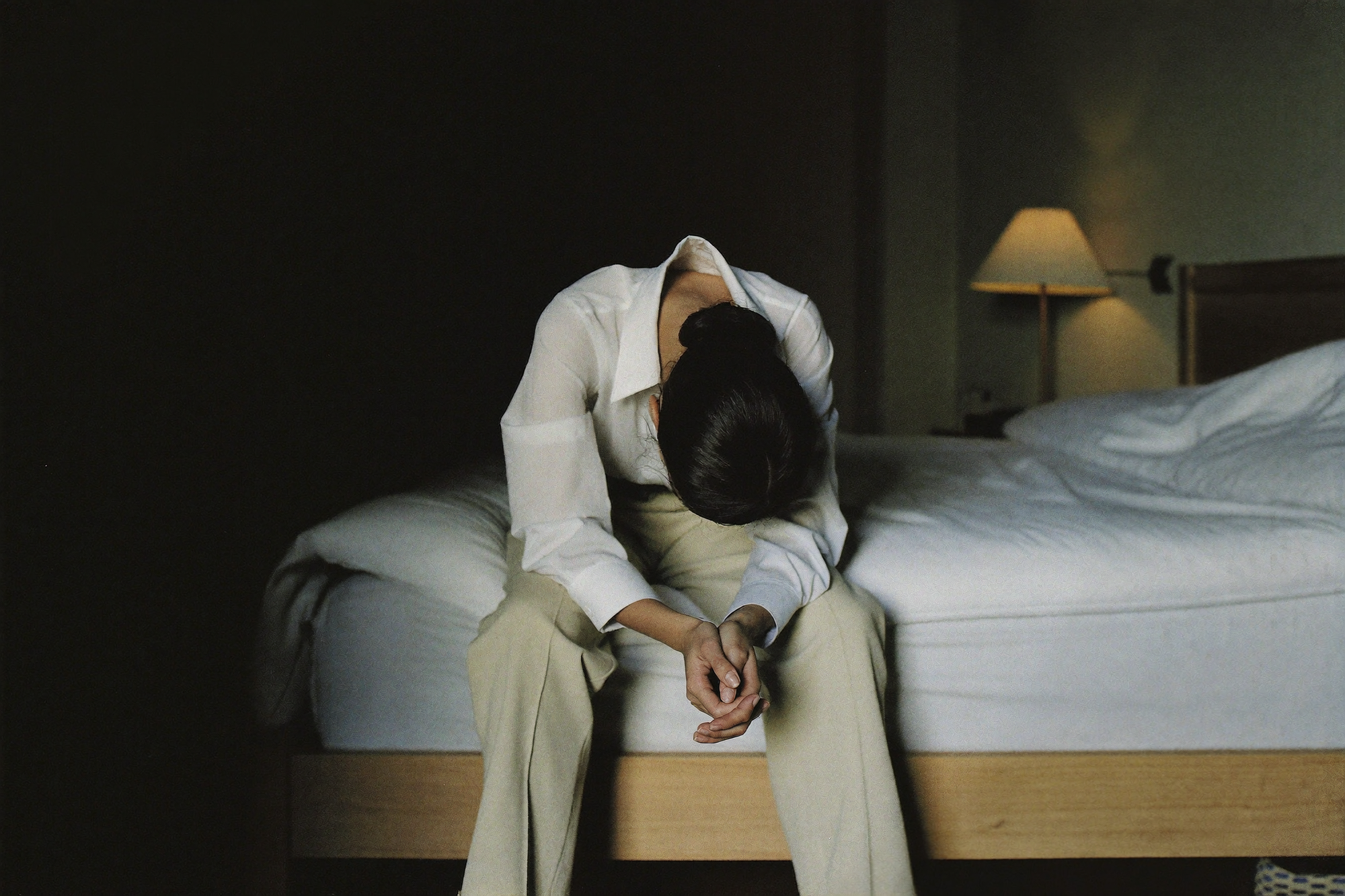
Then there are the other days. The ones where something went badly wrong at four in the afternoon and you are still holding it at eleven at night. On those days the routine doesn't fail because you lack discipline. It fails because it was designed for a different problem.
The problem isn't tiredness
After a bad day you are usually exhausted and completely unable to sleep, which feels like a contradiction and isn't. Your body is tired; your nervous system is still running the day back.
Dimming the lights does nothing about that. Light tells your body what time it is. It has no opinion about the conversation you had at four.
So we do something different
We get it out of our heads and onto paper
Ten minutes, written down, no structure. Not journalling in any spiritual sense — more like emptying a bag onto a table. What happened, what we're dreading tomorrow, what we should have said.
The point isn't insight. It's that a thought written down stops circling. Anything that's going to wake you at three in the morning has somewhere else to be.
We move, badly and briefly
Ten minutes of walking, usually around the block, sometimes just up and down the stairs. Not exercise. The aim is to finish the physical version of the stress response your body started hours ago and never completed.
We make the room warmer than usual, then colder
A hot shower, then a cool room. The shower brings blood to the surface of your skin; stepping out dumps that heat and your core temperature drops faster than it otherwise would. That drop is part of how sleep starts. It's the closest thing to a physical off-switch we've found.
You can't reason your way into sleep. You can only make the conditions right and stop interfering.
And if it still doesn't work
We get up.
This is the least intuitive rule and the most important one. If you've been lying there for twenty minutes or so, get out of bed and do something dull in dim light until you feel genuinely sleepy.
It isn't folk wisdom. It's a core component of cognitive behavioural therapy for insomnia — the first-line treatment, recommended ahead of medication — and Colin Espie, Professor of Sleep Medicine at Oxford, sets out the reasoning in Overcoming Insomnia and Sleep Problems. Lying awake and frustrated teaches your brain that the bed is a place where you lie awake and get frustrated. Twenty minutes at a time, that lesson sticks.
So: up, low light, something boring. No phone, because the phone is not boring. Back when sleepy.
What we've stopped doing
Trying harder. Checking the clock. Calculating how many hours are left, which is a guaranteed way to spend them awake. And drinking to take the edge off — it does help you lose consciousness, and it wrecks the second half of the night doing it.
The next morning
Get up at the usual time anyway. Outside for ten minutes. Go to bed earlier tonight instead of sleeping later today.
One bad night is a bad night. It only becomes a bad week if you try to fix it by moving your mornings.