
Our Story
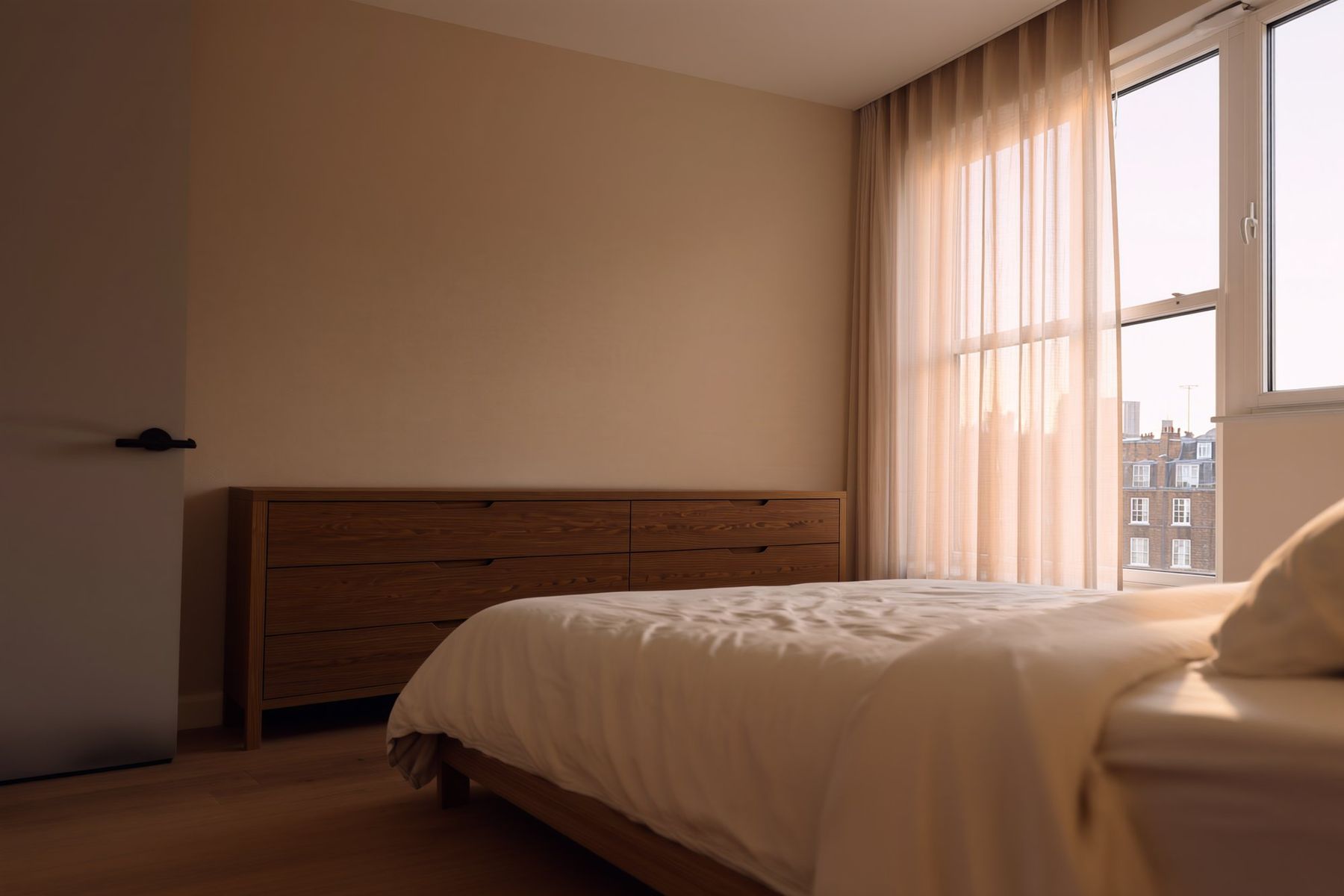
Noura started in a rented flat in London, at the point where two people realised they had stopped sleeping properly and had quietly accepted it as the price of being ambitious.
Five years in that city taught us what bad sleep really costs. Not energy — anyone can push through tired. What it costs is judgement. The decisions you make on four bad nights are not the decisions you would have made on four good ones, and you rarely notice the difference until much later.
The room was the problem
We tried the usual things first. Earlier alarms. Less coffee. An app that scored our nights and mostly made us anxious about them.
What actually changed things was embarrassingly unglamorous: we fixed the room. The ceiling light came off at half past nine. A lamp went on instead. The phone charger moved out of arm's reach. We dealt with the streetlight and the neighbour's door — two problems we had tolerated for over a year because each one, alone, wasn't worth solving.
Within a few weeks we were falling asleep faster. Not because of any single object, but because the room had stopped sending us mixed signals.
Tomorrow starts tonight.
Why we started selling things
Because assembling that room took us the best part of two years, a great deal of money spent badly, and a drawer full of things that didn't work.
Sleep is a crowded, noisy market. Most of it is sold on fear or on promises no product can keep. We wanted to build the opposite: a short, deliberate collection where every item earns its place, arranged in the order you actually use it — an evening, a night, a morning.
That's what the three rituals are. Not categories invented for a website. The literal sequence we follow ourselves.
What we're not
We're not doctors, and we don't run a laboratory. We won't tell you a candle will cure your insomnia, because it won't, and anyone who says otherwise is selling you something worse than a candle.
What we can tell you is what we've read, what we've tested on our own nights, and where the evidence stops and preference begins. If your sleep is persistently bad, that's a conversation for a doctor, not for us.
Where we are now
Noura is still two people. Everything you see here — the photographs, the words, the choice of every product — was made by us, in the room the whole thing came from.
We think you should build better evenings. We think most people have never been told that the last hour of the day is worth designing. And we think you'll make better decisions tomorrow if you do.