Buying Less, Choosing Better
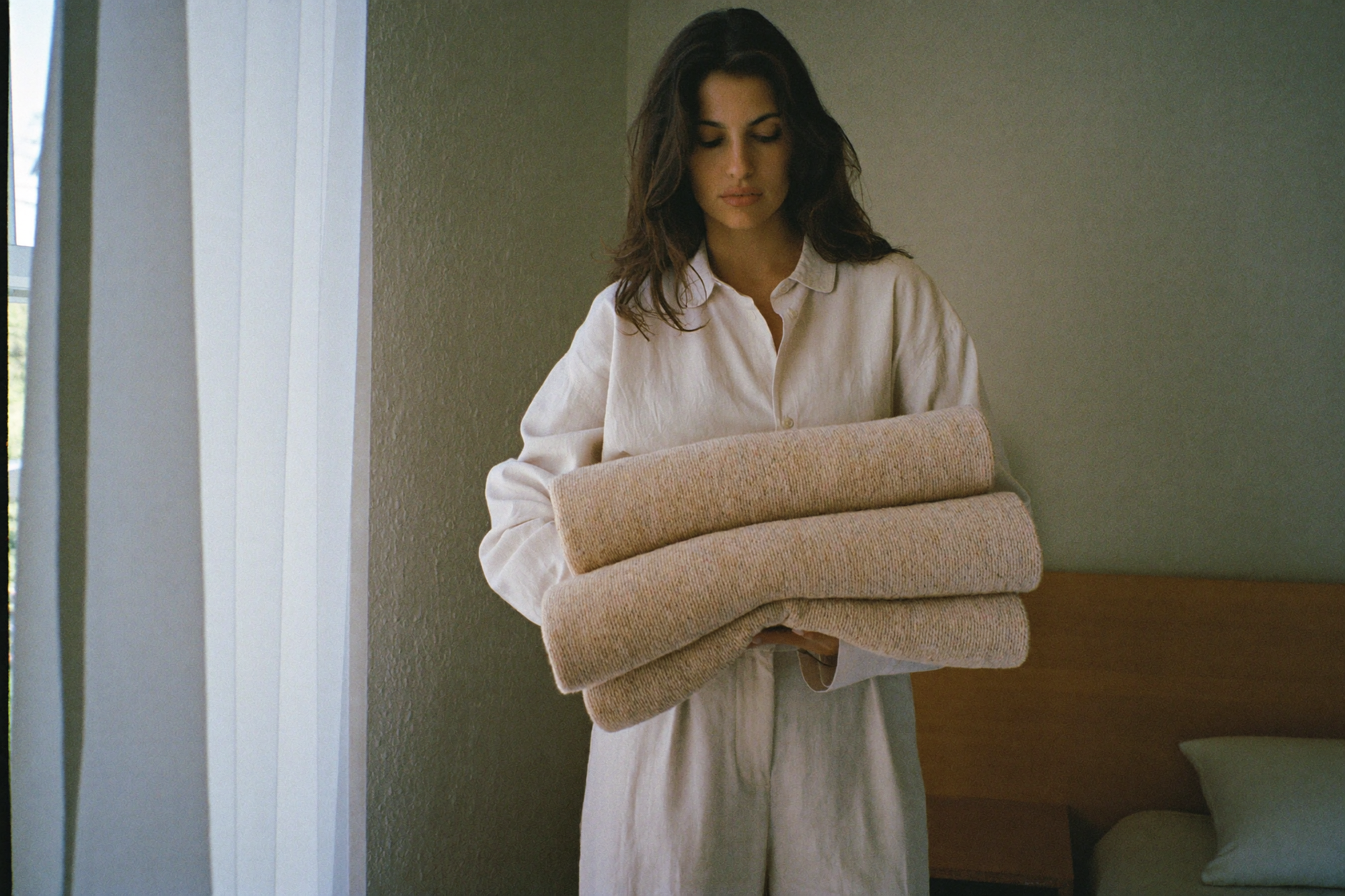
We sell nine things. That number is deliberate and it costs us money.
The obvious way to run a shop like this is to add products — more scents, more colours, a second blanket, a travel version of everything. Every one of those would sell. We keep not doing it, and this is the reasoning.
The drawer
Before Noura existed there was a drawer in our flat containing: three sleep sprays, two apps' worth of subscriptions, a weighted eye mask that was too heavy, an air purifier that turned out to be loud, and supplements bought at two in the morning after a bad week.
None of it worked. Not because the objects were bad, particularly — because buying was the activity. Each purchase was a way of feeling like the problem was being addressed, which is a very different thing from addressing it.
Nothing in that drawer failed. It was never used the same way twice.
What actually changed things
Turning off a light. Moving a charger. Getting up at the same time.
All free. All boring. All requiring repetition rather than a decision. This is genuinely inconvenient for a company that sells objects, and we've decided to say it anyway, because a customer who fixes their lighting and buys nothing is still someone we've helped — and they'll remember where they read it.
How we choose what to sell
Three questions, and a thing has to pass all three: is there a plausible mechanism, does it survive a month of our own use, and does it earn a place in the sequence rather than compete with something already in it.
Most things fail the third. A second candle scent adds choice and adds nothing else.
The honest version of what we sell
Objects that support a habit. Not one of them creates the habit, and none of them works if used once.
If you buy the blanket and keep your bedtime chaotic, you have bought a nice blanket. If you fix your bedtime first, the blanket becomes worth having. That order matters and almost no one selling to you will say so.
What we'd tell you to do first
Fix the light. Move the phone. Keep your wake time.
If a month of that isn't enough, come back and we'll be here. We'd rather that than the drawer.